




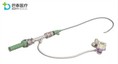
WANTY Sterile PTA Balloon Catheter
Zhejiang Barty Medical Technology Co., Ltd. was established in August 2015 in Hangzhou Economic and Technological Development Zone. Engaged in two major lines of cardiovascular, peripheral vascular intervention. There are currently more than 100 employees in Barty Medical with an average age of 28 years. Company's core members are from internationally renowned foreign medical device companies with working experience more than 15 years. Barty medical is result-oriented to human health, and continues to develop vascular interventional products.
With the building area of 5,000 square meters, our factory is a Million level purification (local hundred level) clean workshop in line with the "GMP" requirements, in which equipped with our professional facilities and workers. Most of them are in the field for decades under the directions of our best senior engineer.
Why choose us?
High quality
Our products are manufactured or executed to very high standards, using the finest materials and manufacturing processes.
Professional team
Our professional team collaborate and communicate effectively with one another, and are committed to delivering high-quality results. They are capable of handling complex challenges and projects that require their specialized expertise and experience.
Long warranty
The long-term warranty is designed to give consumers more confidence that their purchases and services will continue to be valid.
Rich experience
Dedicated to strict quality control and attentive customer service, our experienced staff is always available to discuss your requirements and ensure complete customer satisfaction.


Peripheral balloon catheters are polymer, long tubes ended with a special balloon used during peripheral arterial angioplasty, i.e., widening of a narrowed artery of the upper or lower limb (PTA). Peripheral arteries are vessels that deliver oxygen-rich blood to the limbs, thus ensuring their proper function. Peripheral angioplasty procedures are performed in patients with atherosclerosis of the limb arteries and persistent symptoms (e.g., pain while walking, tingling, coldness) despite the implemented pharmacological treatment.
Precise and targeted treatment
The peripheral balloon catheter allows for precise positioning within blood vessels, ensuring targeted treatment of specific areas. This level of accuracy is crucial in procedures such as angioplasty or stent placement, where the goal is to open blocked or narrowed arteries.
Minimally invasive approach
Compared to traditional surgical methods, peripheral balloon catheterization offers a minimally invasive approach. This means smaller incisions, reduced scarring, decreased risk of infection, and faster recovery times for patients.
Improved patient comfort
The use of peripheral balloon catheters can significantly enhance patient comfort during vascular interventions. With their sleek design and flexibility, these devices cause minimal trauma to surrounding tissues while still delivering effective treatment.
Versatile applications
Peripheral balloon catheters are highly versatile tools that can be used across various vascular procedures including arterial and venous interventions. Their adaptability makes them an essential component in the field of interventional radiology.
Cost-effectiveness and accessibility
Another advantage lies in the cost-effectiveness and accessibility associated with peripheral balloon catheterization procedures compared to traditional surgeries or more invasive techniques like bypass surgery or amputation prevention measures.

Rapid exchange balloon catheter
The rapid exchange balloon dilation catheter is currently the most widely used type of balloon dilation catheter in percutaneous coronary intervention (PCI). The catheter has a side hole 25cm from the tip of the balloon, through which the guide wire is inserted and emerges from the side hole when it is inserted through the top of the balloon. This design greatly facilitates the operation of the operator and saves time. The structure of the rapid exchange balloon is also different from other types of balloons in that it includes a connection segment between the balloon and the push rod, occasionally leading to rupture. Both the balloon and guide wire are operated by one person, resulting in an ideal imaging effect. The disadvantage of this type of balloon catheter is that if the entire balloon system is not removed, the guide wire cannot be replaced. If an extension guide wire is not used, the OTW balloon cannot be replaced, and the push force is slightly reduced, and the tracking is slightly worse.
Over-the-wire balloon catheter
The over-the-wire balloon dilation catheter (OTW) was first used in PTCA in 1982. It can be used for CTO lesions or when guide wire exchange is required, as well as for interventricular septal chemical ablation and central cavity pressure measurement and blood sampling. Currently, OTW balloons are rarely used clinically. The advantages of the OTW balloon dilation catheter include easy exchange of guide wires and good tracking. When the guide wire is difficult to pass through the occlusive lesion, the OTW balloon can provide additional support, similar to the role of a microcatheter. If the guide wire still cannot pass through the lesion, the OTW balloon dilation catheter can be used as a transmission catheter to exchange other guide wires. After the guide wire passes through the lesion, the OTW balloon dilation catheter can also be used for distal angiography to facilitate judging whether the guide wire is located in the true cavity. Therefore, the OTW balloon dilation catheter still has certain advantages in handling CTO lesions. The disadvantage of this type of balloon catheter is that the balloon size is slightly larger and the length of the steel wire is 300 cm, requiring cooperation between two operators.
Fixed guidewire balloon catheter
The balloon dilation catheter has a flexible plastic guide wire fixed at the top of the catheter that is 2 cm long. Among the commonly used balloon dilation catheters, it has the smallest outer shape, which increases the rate of crossing the lesion and results in an ideal imaging effect, and only requires one person to operate it. However, when the catheter enters the target blood vessel, it needs to be pushed forward while rotating in both directions, making the catheter prone to breakage. It cannot move independently, and cannot exchange guide wires. It is basically no longer used clinically.
Types of perfusion balloon catheters
The perfusion balloon dilation catheter has multiple side holes at its proximal and distal ends, so when the balloon is inflated, blood flow can still enter the diseased distal end.
When the average aortic pressure is 80 mmHg, the distal blood flow can still reach 40-60 ml/min. When continuous balloon pressure is needed to treat complications such as coronary artery perforation, the use of perfusion balloon dilation catheters has certain advantages. The main disadvantage is that the catheter is relatively thick and has poor ability to cross lesions.
Special types of balloon catheters
The special types of balloons currently used in clinical practice mainly include double wire balloons, cutting balloons, drug-eluting balloons, etc. Essentially, these three types of balloons belong to rapid exchange balloon dilation catheters, but they have special functions that differ from conventional rapid exchange balloons.
The outer diameter of the double wire balloon is similar to that of a regular balloon, and there is an inner lumen at the end of the balloon for guiding the wire shape. In addition, there is a fixed wire on the surface of the balloon, located at the position of 180° on either side of the balloon from the guide wire.
The double wire balloon can cut plaque tissue in a regular manner, with minimal damage to the endothelium and ensuring that the balloon does not shift. The cutting balloon is a product that combines micro-cutting technology with balloon dilation. The currently clinically used cutting balloons are third-generation products, which have better passability, can achieve full dilation with lower pressure, and have low rates of irregular tearing of the vascular intima and low rates of re-narrowing in the long term.
The drug-eluting balloon is a product that combines traditional balloon dilation technology with drug-eluting technology, and is gradually showing its superiority as an effective supplement to stenting. The drug-eluting balloon can avoid side effects caused by metal stents and polymer carriers, and can apply drugs to specific areas of the diseased blood vessel wall to control re-narrowing.
Material of Peripheral Balloon Catheter
These catheters are typically made of a variety of polymers, including polyurethane, silicone, latex, polyethylene, and polyvinyl chloride. Each of these polymers has its own unique properties and advantages that make it suitable for use in the construction of balloon catheters.
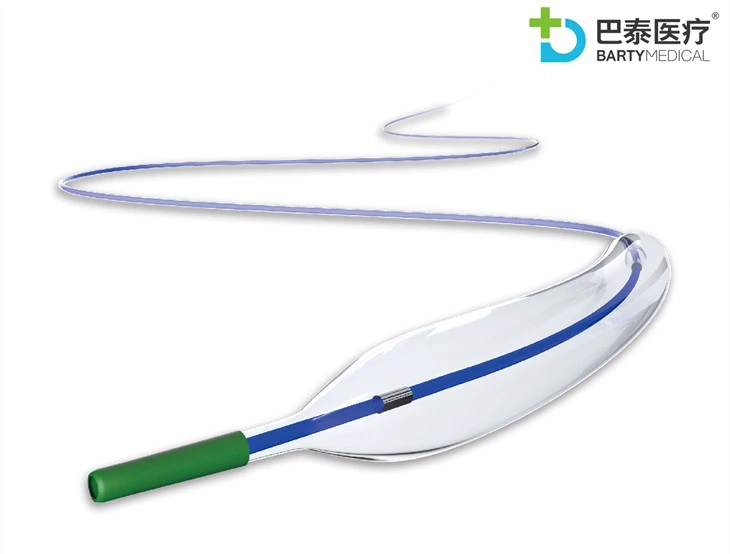
A peripheral balloon catheter is a medical device designed to open up blocked or narrowed blood vessels in the body. It consists of a flexible tube called a catheter with an inflatable balloon at its tip. This balloon can be inflated and deflated using fluid pressure, allowing it to compress plaque or other obstructions against artery walls.
During a vascular intervention procedure, such as angioplasty, the physician inserts the peripheral balloon catheter into the affected blood vessel through a small incision or puncture site. The catheter is guided through the arteries using imaging technology until it reaches the blockage.
Once positioned correctly, the balloon is inflated to expand and widen the narrowed artery or clear away any obstructions. This creates more space for blood flow and improves circulation to vital organs and tissues.
The inflation pressure exerted by the peripheral balloon catheter compresses plaque against arterial walls, effectively restoring normal blood flow. After sufficient time has passed for treatment, typically just minutes, depending on individual circumstances, the physician deflates and removes both the inflated balloon and catheter from inside your body.
This minimally invasive technique offers several advantages over traditional surgical methods for vascular interventions:
● Reduced risk: Peripheral balloon catheters carry lower risks compared to open surgery techniques.
● Faster recovery: Patients tend to experience quicker recovery times due to less tissue trauma.
● Fewer complications: Complications associated with major surgeries are significantly reduced.
● Less scarring: The smaller incisions required result in minimal scarring.
During vascular interventions like angioplasty procedures, peripheral balloon catheters play an essential role in clearing blockages within blood vessels. Their ability to inflate and deflate allows them to restore proper blood flow while minimizing risks and facilitating faster patient recoveries. It's a remarkable medical device that continues to revolutionize vascular care.
Application of Peripheral Balloon Catheter
Coronary angioplasty
One of the primary applications of balloon catheters is in coronary angioplasty, a procedure designed to address coronary artery blockages. During this intervention, the deflated balloon is guided to the site of arterial narrowing, where it is then inflated to compress the plaque, restoring optimal blood flow to the heart.
Peripheral angioplasty
Beyond the coronary arteries, balloon catheters find utility in peripheral angioplasty, targeting blockages in arteries outside the heart. Whether in the legs, arms, or other peripheral vessels, these catheters aid in dilating narrowed passages, alleviating symptoms and improving circulation.
Renal angioplasty
Balloon catheters are instrumental in renal angioplasty, a procedure focused on addressing stenosis or blockages in the renal arteries. By carefully inflating the balloon at the site of obstruction, medical professionals can enhance blood flow to the kidneys, contributing to overall renal health.
Pulmonary angioplasty
In cases where pulmonary arteries are afflicted by stenosis or other vascular issues, balloon catheters become valuable tools in the hands of medical experts. Controlled inflation of the balloon aids in widening these vessels, optimizing pulmonary circulation.
Gastroenterology procedures
Beyond vascular interventions, balloon catheters are employed in gastroenterology procedures. For instance, in endoscopic dilation, these catheters assist in widening strictures or narrowed passages in the gastrointestinal tract, offering relief to patients with certain digestive conditions.
Obstetric and gynecological applications
In obstetrics and gynecology, balloon catheters are used for procedures such as cervical ripening. By gently expanding the balloon within the cervix, medical professionals can induce labor or prepare the cervix for certain gynecological interventions.
Balloon dilation catheter is mainly composed of three parts including cusp, balloon and pusher. Besides, as the bond between pusher and balloon, connecting piece has great impact on push capacity and fracture resistance of balloon.
Core steel wire will be usually added to balloon bond in order to increase sustaining strength and improve push capacity and fracture resistance of balloon dilation catheter.
Cusp of balloon dilation catheter
The size performance parameters (such as diameter, length and hardness) of balloon dilation catheter cusp are directly related to its ability of passing through occlusive lesion.
If cusp uses cone design, then the diameter of balloon cusp diminishes, and tracking power of balloon dilation catheter increases.
Generally speaking, balloon dilation catheter with short hardhead is suitable for therapy of serious stenotic pathologic change, while dilation catheter with long soft head is more suitable for handling circuity lesions.
Balloon of balloon dilation catheter
Balloon materials have great impact on compliance capacity of balloon dilation catheter. Balloon of PET material has small compliance, while that of POC material has big compliance. Nowadays, the common clinically balloon with half-compliance is made of nylon material.
Rollback performance of balloon dilation catheter means restorability of balloon diameter after balloon dilation recovery. Balloon dilation catheter can be one of the indicators that evaluating balloon passing through lesion.
It is related to balloon material too. At present, balloon surface uses mostly hydrophilic coating material, and improves balloon ability to pass through lesion.
Pusher of balloon dilation catheter
When several balloon dilation catheters shall be sent together for treating lesions, such as bifurcation lesion, the relation between outside diameter of balloon dilation catheter pusher and inner diameter of guiding catheter.

How to Maintain Peripheral Balloon Catheter
● Do not use if inner package is damaged or opened.
● Employ aseptic techniques during removal from the package and during use.
● Any use for procedures other than those indicated in these instructions is not recommended.
● Use prior to the use by date.
● Carefully inspect the catheter prior to use to verify that it has not been damaged during shipment and that its size, shape and condition are suitable for the procedure for which it is to be used.
● Precautions to prevent or reduce blood clotting should be taken when any catheter is used.
● Flush or rinse all products entering the vascular system with sterile isotonic saline or a similar solution via the guide wire access port prior to use.
● Consider the use of systemic heparinization.
● When the system is introduced into the vascular system, it should be manipulated only under high quality fluoroscopy.
● Never attempt to move the guide wire when the balloon is inflated.
● Never use air or any gaseous medium to inflate the balloon.
● The size of the inflated balloon should be selected not to exceed the diameter of the artery immediately distal, or proximal, to the stenosis.
● Inflation in excess of the rated burst pressure may cause the balloon to rupture. Use of a pressure monitoring device is recommended.
Certifications


Our Factory
Established in the year of 2015, Barty was committed to the R&D of vascular intervention including cardiovascular and peripheral system. Our product line includes: DCB Catheter, introducer sheath, angiography catheter, guide catheter,Hp ptca& pta balloon catheter as well as DES,BMS etc. By far, We have got CE certification, ISO13485, free sale certification, dozens of patents on our products, and started to promoting to the domestic and overseas markets.
With the building area of 5,000 square meters, our factory is a Million level purification (local hundred level) clean workshop in line with the "GMP" requirements, in which equipped with our professional facilities and workers. Most of them are in the field for decades under the directions of our best senior engineer.


FAQ
Q: What is a peripheral balloon catheter?
Q: When is a peripheral balloon catheter typically used?
Q: How does a peripheral balloon catheter work?
Q: What are the benefits of using a peripheral balloon catheter?
Q: What is the lifespan of a peripheral balloon catheter?
Q: How long does a peripheral balloon catheter stay in place during a procedure?
Q: Can a peripheral balloon catheter be reused?
Q: What preparation is required before a peripheral balloon catheter procedure?
Q: What is difference between stent and balloon?
Q: Does the balloon stay in your artery?
Q: How is a peripheral balloon catheter inserted?
Q: What is the purpose of the balloon in a catheter?
Q: Can a peripheral balloon catheter cause pain?
Q: How effective is the balloon catheter?
Q: How often can a peripheral balloon catheter be performed?
Q: What is a peripheral balloon?
Q: Can a peripheral balloon catheter be used in emergency situations?
Q: What are the different types of balloons used in angioplasty?
Q: What are balloon catheters made of?
Q: Can a peripheral balloon catheter be performed in an outpatient setting?
Our company is one of the leading peripheral balloon catheter manufacturers and suppliers in China. Feel free to wholesale customized peripheral balloon catheter at competitive price from our factory. For OEM service, contact us.